Monday, November 11, 2024

Learning to Flourish in the Age of AI by Stephen Kosslyn

Stephen Kosslyn’s Learning to Flourish in the Age of AI is a compelling dive into the intersection of artificial intelligence and human cognitive growth. Rather than painting a picture of an apocalyptic AI future or relying on vague, utopian promises, Kosslyn takes a balanced, practical approach, articulating how we can coexist, adapt, and indeed thrive alongside advancing AI. What makes Kosslyn's take unique is his insistence on reframing the narrative to focus on flourishing—redefining personal, societal, and educational success in a world where artificial intelligence is a dominant force.

In this work, Kosslyn embarks on what feels like both a philosophical journey and a cognitive science manual. He proposes strategies for reshaping learning, enhancing cognitive skills, and, crucially, fostering adaptability, which he believes to be the primary skill for a future molded by AI. Kosslyn’s tone is accessible yet authoritative, appealing to lay readers and specialists alike who wish to approach AI not just as a technological marvel but as a dynamic co-actor in human development.

Summary of Each Chapter

  1. Foundations of Human-AI Interaction
    Kosslyn establishes the groundwork, exploring the nuances of AI and human intelligence. He outlines the cognitive similarities and differences, hinting at how both entities could potentially collaborate.

  2. Reimagining Learning in an AI Age
    This chapter emphasizes the need for educational reform, advocating for a shift from rote learning to fostering critical thinking, creativity, and problem-solving—skills where humans excel and which AI cannot easily replicate.

  3. Flourishing Amidst Automation
    Focusing on the workforce, Kosslyn presents strategies for individuals to harness AI for personal growth and career advancement. Here, he proposes adapting to new skills, with an emphasis on flexibility.

  4. Ethics and Emotional Intelligence
    Kosslyn dives into the ethical considerations of AI, stressing the importance of empathy and emotional intelligence, attributes he believes will remain uniquely human.

  5. Building Cognitive Resilience
    This section provides practical tools for cultivating adaptability, resilience, and lifelong learning habits, envisioning these as essential for thriving in an AI-dominated world.

  6. Future-Proofing Society
    Kosslyn rounds out the book with a societal perspective, suggesting reforms in both educational and employment systems to prepare future generations for AI integration.

Explanation of Impactful Phrases

  1. “Flourishing means growing in complexity and capability while remaining anchored to a core of values.”
    Here, Kosslyn suggests that genuine growth involves not just technical skill acquisition but also a steadfast alignment with core human values, urging readers to remember humanity’s ethical foundations.

  2. “Adaptability is the superpower of the 21st century.”
    Kosslyn highlights adaptability as a crucial skill in a world where rapid technological change is constant, emphasizing that the ability to pivot and evolve will be more valuable than static knowledge.

  3. “Emotional intelligence will be our strongest defense against the encroachment of AI on traditionally ‘human’ roles.”
    This phrase encapsulates the notion that while AI may take on logical or repetitive tasks, emotional intelligence is a uniquely human trait that maintains our relevance.

  4. “To future-proof ourselves, we must teach our minds to grow beyond rigid boundaries.”
    Kosslyn advocates for cognitive flexibility, encouraging readers to embrace continuous learning and to challenge their thinking limits.

  5. “AI will not replace us; it will reshape us, provided we shape it first.”
    This statement captures the book’s central thesis: AI can be an agent of growth and improvement if humanity guides its development with foresight and ethical awareness.

What This Book Adds to AI Knowledge

Kosslyn’s book enriches the AI discourse by framing artificial intelligence as not only a tool but a catalyst for human flourishing. Rather than focusing on fears or passive acceptance, he promotes active engagement with AI, encouraging individuals and institutions to rethink learning and work as proactive, adaptive processes. The book’s distinct contribution lies in its focus on practical skills—adaptability, cognitive resilience, and emotional intelligence—highlighting these as future-proofing mechanisms that allow readers to coexist with, and even enhance, AI systems.

Conclusions

Learning to Flourish in the Age of AI is not merely a guide; it’s a roadmap for a thriving future where AI is seen as a partner in human development. Kosslyn’s emphasis on educational reform, adaptability, and ethical foresight is refreshing and urgently needed, as it goes beyond the polarized perspectives on AI to offer actionable strategies. It stands as a vital read for educators, policymakers, professionals, and anyone who wishes to navigate the AI future with confidence and optimism.

Recommended Books and Videos for Further Context

For those looking to explore the ideas in Learning to Flourish in the Age of AI, the following resources provide valuable insights:

  1. Books

    • Life 3.0: Being Human in the Age of Artificial Intelligence by Max Tegmark
    • The Future of the Professions by Richard and Daniel Susskind
    • Superintelligence: Paths, Dangers, Strategies by Nick Bostrom
    • The Human Edge: How Curiosity and Creativity Are Your Superpowers in the Digital Economy by Greg Orme
  2. Videos

    • “The Ethics of Artificial Intelligence” by the Massachusetts Institute of Technology (MIT), which covers the ethical complexities Kosslyn addresses.
    • TED Talk: “How to Get Empowered, Not Overpowered, by AI” by Kai-Fu Lee, who also emphasizes emotional intelligence and adaptability in the AI age.
    • “The Future of Learning” by the World Economic Forum, exploring how educational systems need to evolve in response to technological advancements.

Kosslyn’s Learning to Flourish in the Age of AI lays out a vision of hope grounded in practical wisdom a must read for anyone hoping to adapt and grow as AI continues to shape our lives.


Review of First Step to Quantum Computing: A Practical Guide for Beginners by Shabani J.

In First Step to Quantum Computing, Shabani J. distills the enigmatic world of quantum computing into a guide that is both approachable and technically sound, making it a foundational text for beginners eager to explore the technology shaping the future. The book demystifies quantum theory and computing's core principles, translating them into concepts accessible to non-specialists, while preserving the rigor required for budding quantum enthusiasts. Shabani does an excellent job of simplifying concepts like qubits, superposition, and entanglement, placing them within a broader context of real-world applications and technological innovation.

Each chapter sequentially builds on the last, leading readers through progressively complex topics. Shabani balances theory with practice, including exercises that guide readers through quantum gates, circuits, and algorithms. The tone is refreshingly optimistic yet grounded, suggesting a wealth of possibilities while cautioning against hype. In a field that often intimidates new learners, Shabani’s accessible prose and insightful analogies illuminate quantum computing’s practical potential and its implications for computing, cryptography, and artificial intelligence.

By the book’s conclusion, readers are equipped with a roadmap not only for further learning but also for understanding the profound impact quantum computing may have on multiple industries. Shabani's guide is essential for anyone intrigued by the rapidly evolving quantum landscape and serves as an ideal first step into the world of quantum science.

Chapter Summaries and Key Knowledge Points

Each chapter breaks down the essential aspects of quantum computing, guiding readers from fundamental concepts to practical applications.

  1. Chapter 1 - Introduction to Quantum Mechanics
    Basic principles of quantum theory—wave-particle duality, superposition, and entanglement—lay the groundwork for understanding quantum bits, or qubits.
    Impactful Applications: Quantum sensing, cryptography, and computation.

  2. Chapter 2 - Qubits and Quantum States
    Exploration of qubits, the quantum equivalent of classical bits, with a focus on their unique properties of superposition and entanglement.
    Impactful Applications: Qubit manipulation for efficient data processing and secure communications.

  3. Chapter 3 - Quantum Gates and Circuits
    Quantum gates are introduced, showcasing how they manipulate qubits to execute operations. Quantum circuits and algorithms emerge as key components.
    Impactful Applications: Applications in machine learning, optimization, and cryptography.

  4. Chapter 4 - Quantum Algorithms
    Examines famous algorithms, such as Shor's for factoring and Grover's for searching, demonstrating quantum computing’s efficiency over classical approaches.
    Impactful Applications: Potential for breakthroughs in cryptanalysis, large-scale computation, and AI.

  5. Chapter 5 - Quantum Cryptography and Communication
    Explores quantum cryptographic protocols and quantum key distribution, enabling unprecedented security.
    Impactful Applications: Quantum-resistant encryption for finance, government, and personal privacy.

  6. Chapter 6 - Quantum Hardware and Architectures
    Overview of existing quantum hardware (e.g., superconducting qubits, trapped ions) and architectural challenges.
    Impactful Applications: Quantum simulators for materials science and drug discovery.

  7. Chapter 7 - Future Directions and Ethical Implications
    Examines ethical concerns, potential risks, and the future evolution of quantum computing in society.
    Impactful Applications: Addressing security, ethical data handling, and sustainable tech development.

Main Applications of Quantum Computing

  • Cryptography: Revolutionizing data security through quantum cryptography.
  • Optimization: Offering solutions to complex optimization problems in logistics, finance, and energy.
  • Artificial Intelligence: Enhancing machine learning and AI algorithms with quantum-based computations.
  • Material Science: Simulating quantum-level interactions for novel materials and drug discovery.
  • Climate Modeling: Improving predictions by processing enormous datasets faster than classical computers.

Ten Most Impactful Quotes from First Step to Quantum Computing

  1. “Quantum computing isn’t just the next step in technology; it’s a whole new reality in how we understand and manipulate information.”

    • Shabani introduces the subject with a profound insight, emphasizing quantum computing as a paradigm shift.
  2. “In the world of qubits, the certainty of 1s and 0s dissolves, and in that dissolution, we find limitless potential.”

    • This phrase encapsulates the concept of superposition, highlighting the unique flexibility of qubits.
  3. “Entanglement defies intuition and rewrites the rulebook on how particles communicate, no matter the distance.”

    • Shabani’s vivid explanation of entanglement underscores the profound implications for data transmission.
  4. “Classical computers calculate; quantum computers predict, adapt, and eventually, transform.”

    • An evocative summary of quantum computing’s potential, contrasting it with classical systems.
  5. “Building a quantum computer is akin to constructing reality at the subatomic level—it’s engineering with the universe itself as the toolkit.”

    • Shabani poetically describes the technical challenges and awe-inspiring nature of quantum technology.
  6. “Quantum gates are the brushes; algorithms are the strokes, painting solutions to problems once deemed unsolvable.”

    • A metaphor for how quantum circuits and algorithms operate together to solve complex issues.
  7. “To understand quantum, one must abandon certainty and embrace probabilities—a fundamental shift for any student of computation.”

    • Shabani reminds readers of the intellectual shift required to grasp quantum mechanics.
  8. “The race for quantum supremacy is not just about power; it’s a quest to redefine knowledge itself.”

    • Reflecting on the competitive landscape, this quote highlights the strategic importance of quantum advancement.
  9. “In the quantum realm, data security doesn’t just improve; it transforms, reaching levels of encryption once considered theoretical.”

    • Shabani comments on the revolutionary implications of quantum cryptography.
  10. “Today’s quantum curiosities will be tomorrow’s technological cornerstones, building industries yet unimagined.”

    • A powerful vision of the future, urging readers to consider the long-term impact of quantum technology.


Timeline of Key Events and Influential Figures in Quantum Computing

  1. 1900 - Max Planck and the Quantum Hypothesis

    • Contribution: Planck introduced the concept of quantized energy levels, setting the foundation for quantum theory.
  2. 1925-1927 - Werner Heisenberg and Erwin Schrödinger Formulate Quantum Mechanics

    • Contribution: Heisenberg's uncertainty principle and Schrödinger’s wave mechanics provided mathematical foundations essential to quantum physics.
  3. 1935 - Albert Einstein and the EPR Paradox

    • Contribution: Einstein, Podolsky, and Rosen presented the EPR paradox, questioning quantum entanglement and setting the stage for decades of debate.
  4. 1980 - Richard Feynman Proposes Quantum Simulation

    • Contribution: Feynman suggested using quantum mechanics to simulate physical systems, a pivotal idea for quantum computing.
  5. 1985 - David Deutsch’s Quantum Turing Machine

    • Contribution: Deutsch proposed a theoretical model of a quantum computer, demonstrating the potential to solve problems beyond classical capabilities.
  6. 1994 - Peter Shor Develops Shor’s Algorithm

    • Contribution: Shor’s algorithm demonstrated that a quantum computer could factor large numbers efficiently, a breakthrough for cryptography.
  7. 1997 - Lov Grover’s Quantum Search Algorithm

    • Contribution: Grover’s algorithm illustrated how quantum computing could search unsorted databases more quickly than classical computers.
  8. 2001 - IBM and Stanford Successfully Run Shor’s Algorithm

    • Contribution: The first experimental implementation of Shor's algorithm on a quantum computer marked significant progress in practical quantum computing.
  9. 2011 - D-Wave Sells the First Quantum Computer

    • Contribution: D-Wave’s sale of a quantum annealing computer to Lockheed Martin marked a commercial milestone for the field.
  10. 2019 - Google Claims Quantum Supremacy

  • Contribution: Google announced it had achieved quantum supremacy, solving a problem faster than a classical supercomputer, a controversial but notable achievement.

Shabani J.’s First Step to Quantum Computing positions readers to appreciate the historical progression and pivotal individuals who shaped quantum science. This guide is invaluable for understanding both the conceptual and technical milestones in quantum computing’s evolution.


Book Conclusions

Shabani emphasizes that while quantum computing is still in its nascent stages, its transformative potential is undeniable. Quantum computing may redefine fields like AI, cryptography, and complex system modeling. However, ethical considerations and regulatory standards will be critical in steering its development responsibly.

Recommended Authors in Quantum Computing

  1. Scott Aaronson - Known for his work on quantum mechanics and computational complexity.
  2. Michael A. Nielsen - Co-author of Quantum Computation and Quantum Information, a seminal textbook.
  3. David Deutsch - Pioneer of quantum computing theory.
  4. Richard Feynman - His lectures and writings provide foundational insights into quantum mechanics.
  5. Peter Shor - Creator of Shor’s algorithm, essential reading for understanding quantum cryptography.

This book provides an invaluable first step into a complex yet thrilling field, giving readers both a road map and inspiration to explore quantum computing’s boundless possibilities.


Friday, November 8, 2024

Review of Masters of Scale: Surprising Truths from the World’s Most Successful Entrepreneurs by Reid Hoffman

Reid Hoffman’s Masters of Scale is a captivating exploration of how groundbreaking businesses are built and scaled, featuring insights from some of the most influential entrepreneurs of our time. Based on Hoffman’s acclaimed podcast, this book does more than offer traditional business advice; it provides a rare glimpse into the mindsets, strategies, and unexpected twists that have defined iconic companies. Hoffman's gift lies in distilling complex business concepts into practical, story-driven lessons that highlight both the artistry and science of scaling an enterprise.

Each chapter is structured around core themes like innovation, adaptability, leadership, and resilience, delivering real-world insights that go beyond theory. Hoffman, co-founder of LinkedIn and a seasoned investor, provides a guiding hand, weaving his commentary with firsthand experiences and anecdotes from entrepreneurs like Mark Zuckerberg, Sheryl Sandberg, and Sara Blakely. The book’s strength is in its relatability and honesty—Hoffman doesn’t just celebrate success; he underscores the tough decisions, unforeseen obstacles, and moments of doubt that inevitably arise in the journey to scale.

With sharp prose and a conversational tone, Hoffman creates an engaging experience that feels like sitting across the table from a mentor. Rather than glorifying the overnight success myth, he emphasizes the unpredictable nature of business growth, showing that what works for one company may not work for another. Ultimately, Masters of Scale is as much a book about building resilient teams and cultures as it is about scaling companies, making it a must-read for entrepreneurs, leaders, and anyone curious about what it takes to make a lasting impact.

Key Lessons from the Book

The book presents a wide range of entrepreneurial lessons, each accompanied by stories and examples that illustrate their real-world application. Here’s an overview of its key teachings:

  1. Embrace Uncertainty and Take Calculated Risks

    • Entrepreneurs are encouraged to step into the unknown, understanding that risks are intrinsic to innovation. Hoffman and his contributors suggest that scaling a business requires taking chances and not letting fear of failure inhibit progress.
  2. Build and Adapt with Flexibility

    • The necessity of adaptability is a recurring theme. Hoffman explains that successful companies grow by continuously adjusting to market demands, technological changes, and customer needs, citing companies like Airbnb and Facebook as examples of flexible innovation.
  3. Invest in Your Team and Culture Early

    • Hoffman underscores the importance of building a strong company culture and hiring the right people early on. He notes that employees are not just assets; they are the heart of a company’s values and vision.
  4. Learn from Failure, Don’t Fear It

    • Rather than viewing failure as the end, Hoffman reframes it as an essential part of growth. Entrepreneurs like Sara Blakely of Spanx highlight how setbacks are often stepping stones to eventual success, encouraging readers to learn from their mistakes.
  5. Scale with Purpose and Mission in Mind

    • According to Hoffman, scaling without a clear purpose can lead to unsustainable growth. Companies need a well-defined mission to stay focused, guiding decision-making as they expand.
  6. Focus on the Network Effect

    • Hoffman highlights the power of networks, showing how businesses can benefit exponentially by leveraging their users to attract more users, as LinkedIn and other social networks have done. He explains how network effects can become a moat, protecting businesses from competitors.
  7. Prioritize Customer-Centricity

    • The book emphasizes that customer loyalty is central to scaling. By understanding and prioritizing customer needs, companies can create products that resonate deeply, as exemplified by companies like Netflix and Uber.
  8. Timing and Patience Matter

    • Timing is often crucial to success. Hoffman warns against premature scaling and suggests that patience can be an entrepreneur’s best ally, allowing for adjustments as the business gains traction.
  9. Seek Mentorship and Learn from Others

    • Hoffman stresses the value of mentorship, advocating for continuous learning from other entrepreneurs who have navigated similar paths.
  10. Create an Environment for Experimentation

    • He encourages companies to cultivate a culture of experimentation, where failure is acceptable and innovation can flourish. This approach enables businesses to stay ahead by testing new ideas and pivoting when necessary.

Impactful Quotes from the Book

Here are some of the book’s most thought-provoking quotes, along with brief interpretations:

  1. “If you’re not embarrassed by the first version of your product, you’ve launched too late.”

    • This quote encapsulates the spirit of “fail fast, learn faster.” Launching early allows for real-world feedback, which is invaluable for improvement.
  2. “Scale unearths the true nature of your product and company culture.”

    • Hoffman suggests that rapid growth will reveal both strengths and weaknesses, emphasizing the importance of a strong foundation in product quality and team dynamics.
  3. “A good idea is only as valuable as the team that breathes life into it.”

    • The success of any venture relies on the people involved, from founders to employees, reminding readers to invest in team building and talent development.
  4. “Don’t discount luck, but never rely on it.”

    • This quote speaks to the role of chance in success but reminds entrepreneurs to focus on skill, hard work, and strategy, rather than waiting for a lucky break.
  5. “Success is not just about having the best idea, but creating a movement.”

    • This idea captures the importance of cultivating a community or “tribe” that supports and believes in your vision, transforming your business into a social and cultural force.

Conclusions of the Book

In Masters of Scale, Hoffman dispels myths about business growth, offering a balanced view that celebrates both the highs and the inevitable struggles of entrepreneurship. The book’s most profound takeaway is that scaling is not an exact science; it’s a blend of intuition, calculated risk, and continuous learning. Hoffman’s narrative emphasizes that successful scaling is often about building a lasting legacy rather than achieving immediate fame or fortune.

The book is an invitation to think big but to proceed with purpose and humility. Hoffman’s own experience, paired with those of his guests, shows that even the most successful entrepreneurs face moments of doubt and failure. By promoting resilience, strategic risk-taking, and adaptability, Masters of Scale redefines what it means to succeed in today’s fast-paced business environment. For aspiring entrepreneurs and seasoned leaders alike, Hoffman’s insights are a reminder that building a legacy takes not just vision but unyielding perseverance.

Recommended Authors with Similar Profiles

If you enjoyed Masters of Scale, here are some authors whose books offer similar insights on entrepreneurship, innovation, and business leadership:

  1. Ben Horowitz - The Hard Thing About Hard Things: Building a Business When There Are No Easy Answers

    • Known for his candid style, Horowitz provides practical wisdom for dealing with the real-life challenges of entrepreneurship.
  2. Peter Thiel - Zero to One: Notes on Startups, or How to Build the Future

    • Thiel’s exploration of startups and innovation encourages readers to think differently and seek unique, valuable solutions.
  3. Eric Ries - The Lean Startup: How Today’s Entrepreneurs Use Continuous Innovation to Create Radically Successful Businesses

    • Ries’ approach to startup success through iterative development and validated learning is well-aligned with Hoffman’s principles.
  4. Angela Duckworth - Grit: The Power of Passion and Perseverance

    • Duckworth delves into the role of passion and resilience in achieving success, an essential mindset for entrepreneurs.
  5. Jim Collins - Good to Great: Why Some Companies Make the Leap…and Others Don’t

    • Collins’ research-driven approach to understanding what makes companies successful over the long term is a valuable read for anyone scaling a business.
  6. Daniel Pink - Drive: The Surprising Truth About What Motivates Us

    • Pink’s exploration of motivation and purpose ties into Hoffman’s emphasis on building culture and a values-driven company.
  7. Clayton Christensen - The Innovator’s Dilemma: When New Technologies Cause Great Firms to Fail

    • Christensen’s work on disruptive innovation provides critical insights into how businesses can adapt and scale in the face of technological change.
  8. Simon Sinek - Start with Why: How Great Leaders Inspire Everyone to Take Action

    • Sinek’s focus on purpose aligns with Hoffman’s idea of building a business rooted in vision and values.  

 Each of these authors offers unique perspectives that build on the themes in Masters of Scale, adding depth to our understanding of what it takes to succeed in an ever-evolving business landscape.

Masters of Scale is a rare blend of storytelling, insight, and actionable advice, perfect for anyone looking to understand the essence of scaling a business. Through his unique perspective, Hoffman reminds us that while scaling is complex, it’s also a deeply human endeavor, full of lessons, surprises, and opportunities for growth.

Thursday, November 7, 2024

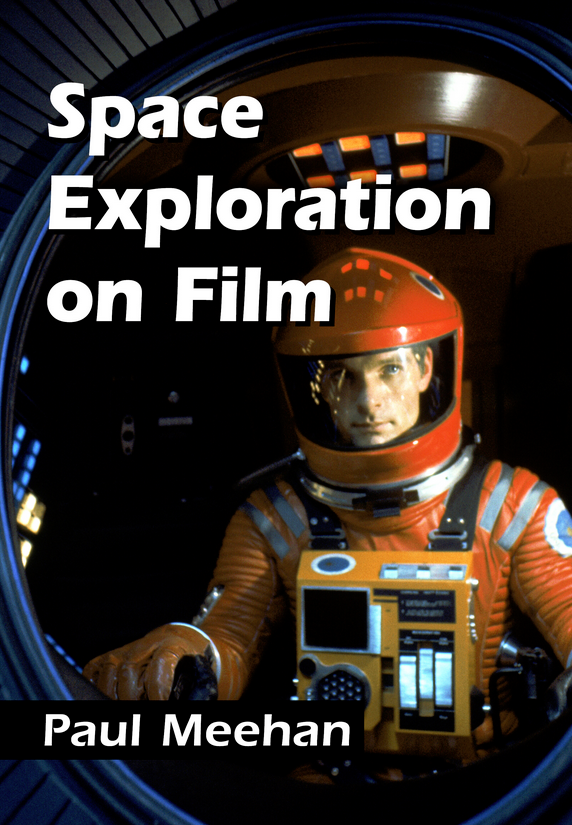
Space Exploration on Film by Paul Meehan

Review of Space Exploration on Film by Paul Meehan

In Space Exploration on Film, Paul Meehan takes readers on an extraordinary journey through the cinematic universe of space exploration. This isn’t merely a guide to blockbuster films or a series of reviews; it's an intricate and thoughtful exploration of how Hollywood has mirrored our hopes, fears, and questions about the final frontier. Meehan maps out the convergence of science and cinema in a way that feels both expansive and profoundly intimate, balancing his encyclopedic knowledge of film with sharp insights into human nature. In his hands, each movie—from early sci-fi thrillers to modern masterpieces—reveals its deeper layers, speaking to the viewer's innermost curiosity and existential wonder.

Meehan’s book isn't just for sci-fi lovers or cinephiles; it’s for anyone fascinated by humanity’s quest for knowledge and the perennial “what if” questions that drive exploration. With vivid descriptions, Meehan provides a behind-the-scenes view into the technological advances and imaginative leaps that have turned speculative fiction into visual reality. He discusses films as cultural artifacts, reflecting the zeitgeist and capturing societal attitudes towards space and our place in the universe. It’s a testament to his skill as a writer that even the most arcane details become engaging, shedding light on both the movies and our collective psyche.

Main Contributions to the Understanding of Science

Space Exploration on Film contributes to science understanding by illustrating how cinema has not only entertained but also educated audiences about the realities and mysteries of space travel. Meehan delves into how filmmakers have collaborated with scientists and engineers, turning theoretical concepts—such as black holes, relativity, and artificial intelligence—into accessible visuals. Through analyses of films like Interstellar, 2001: A Space Odyssey, and Contact, Meehan reveals how cinematic depictions often spark public interest in real scientific inquiry, encouraging viewers to learn more about space science. Furthermore, Meehan shows how these films address philosophical questions about humanity's significance, suggesting that the best space exploration films don't just depict outer space but probe the inner space of human consciousness.

Anecdotes from Film Productions

Meehan’s inclusion of anecdotes from movie productions gives the book a vivid, almost cinematic quality. Here are a few highlights:

  1. Kubrick’s Obsession with Realism in 2001: A Space Odyssey: Meehan recounts how Stanley Kubrick went to extraordinary lengths to ensure accuracy. He consulted with physicists and aerospace engineers, even going so far as to discard a nearly completed set because it didn't meet his vision of authenticity.

  2. The Sound of Silence in Gravity: Director Alfonso Cuarón’s insistence on realistic sound (or lack thereof) in space led to a memorable moment in Gravity, where the sound design left viewers in awe. Meehan explains how the filmmakers captured the silent void of space, using sound as a means to heighten tension and create an unparalleled viewing experience.

  3. Carl Sagan’s Influence on Contact: Meehan highlights how Sagan’s involvement in the film helped ground its speculative elements in real science. The late astronomer was a consultant on set, pushing for portrayals of scientific methodology, and even influencing Jodie Foster’s portrayal of a scientist in search of alien life.

  4. Authenticity in Apollo 13: Ron Howard’s commitment to accuracy extended to casting actual NASA engineers as consultants, ensuring the scenes aboard the spacecraft felt genuine. Howard famously asked his actors to simulate weightlessness, working with NASA to shoot scenes aboard a parabolic flight, which Meehan vividly describes as a blend of ingenuity and grit.

  5. Theoretical Physics and Interstellar: Director Christopher Nolan collaborated with physicist Kip Thorne to ensure accurate portrayals of black holes and relativity. Meehan describes how Thorne’s scientific insight led to breakthroughs in both the film’s visual effects and public understanding of astrophysics.


Five Impactful Quotes and Their Meaning

“Space films remind us that curiosity, though fraught with risks, is the pulse of human progress.”

Meehan underscores the inherent risk in exploration. Through cinema, audiences are reminded that our curiosity is what drives us forward, despite the unknowns and dangers lurking in the cosmos.

“Every frame of a space movie reflects a different shade of humanity’s hopes and fears.”

Here, Meehan captures the idea that space exploration movies are as much about introspection as they are about escapism, reflecting our anxieties and aspirations.

“The silence of space is often louder than the sound of rockets—telling us what we need to know about solitude and resilience.”

Meehan points to how silence in space films, such as in Gravity, conveys themes of isolation and human fortitude, resonating with audiences on a deeply personal level. 

“In the darkness between stars, the cinematic lens finds the light within us. 

A poetic assertion of how, in exploring the vastness of space, filmmakers often highlight the strength and vulnerability of the human spirit

“True to science, space films ignite not just wonder, but a sense of responsibility towards the universe.”

Meehan suggests that beyond awe, these films encourage viewers to ponder ethical and ecological responsibilities, recognizing humanity's role within a larger cosmos.


Conclusion

In Space Exploration on Film, Paul Meehan has crafted a work that’s as enlightening as it is entertaining. Through his detailed filmography and perceptive cultural commentary, Meehan draws connections between science fiction and real-world science, revealing how the two have inspired each other over the years. By showcasing the profound impact that space exploration movies have on public perception, Meehan reminds readers of the transformative power of storytelling. His insights bring clarity to the complex themes of exploration and survival, urging audiences to look beyond the screen and into the universe around them. In doing so, Meehan doesn’t just catalog movies—he reinvigorates our sense of wonder, proving that the journey to understanding space isn’t just out there, but also within.

What Every Engineer Should Know about Software Engineering (2022)

Review of What Every Engineer Should Know about Software Engineering by Phillip Laplante

In What Every Engineer Should Know about Software Engineering, Phillip Laplante crafts an indispensable primer on software engineering tailored for engineers who may not specialize in software but are eager to deepen their understanding of it. Laplante, himself a distinguished expert in software systems, distills complex principles into clear, digestible lessons, making this book a lifeline for professionals across engineering disciplines seeking a solid grounding in software engineering. We would likely appreciate Laplante’s clarity and precision, as well as his practical approach, which balances technical depth with accessibility—a feat not easily achieved in technical writing.

With the relentless advancement of technology, engineers increasingly face interdisciplinary demands, and Laplante’s book addresses this head-on. Each chapter delves into the foundational aspects of software development, management, and integration, offering engineers tools and frameworks that are both comprehensive and versatile. Laplante’s text comes at a time when engineers from fields as diverse as mechanical, electrical, and civil are required to navigate software-based solutions. In a Kakutani-esque style, one might say that Laplante captures the heartbeat of modern engineering’s software demands, bridging technical rigor with intuitive insights.

Principal Contributions to Software Engineering

Laplante's book makes several key contributions to software engineering:

  1. Cross-disciplinary Approach: Unlike many software engineering books that focus solely on specialists, Laplante provides content that is accessible to engineers of all backgrounds, bridging knowledge gaps.
  2. Emphasis on Practical Skills: Rather than delving into abstract theories, Laplante emphasizes practical skills and methodologies that engineers can apply immediately in their roles, from basic coding principles to high-level project management.
  3. Project Management and Ethics: The text not only covers software development but also provides essential insights into project management, ethical concerns, and risk management—key areas often overlooked in traditional software engineering texts.
  4. Simplification of Complex Concepts: Laplante excels in explaining software engineering concepts without compromising their integrity, making advanced topics accessible for a broader engineering audience.
  5. Real-world Applications: The book includes numerous real-world scenarios that allow engineers to see the principles at play in actual engineering projects, adding practical value to theoretical concepts.

Distinctions from Other Software Engineering Texts

Laplante’s book stands apart in several ways. First, it is uniquely designed for engineers from various disciplines, not just software engineers. This interdisciplinary perspective is rare in software engineering literature, which often assumes specialized knowledge. Additionally, Laplante’s focus on practical skills and applied knowledge makes it more of a toolkit than a theoretical textbook. Lastly, his inclusion of topics like ethics, safety, and quality assurance brings a holistic dimension to software engineering that is both timely and relevant.

Five Impactful Quotes and Their Meaning

“Software engineering is not just about coding; it’s about understanding the problem deeply enough to provide the right solution.”

This statement underscores the importance of problem-solving and critical thinking. Laplante emphasizes that software engineering requires a deep comprehension of both the problem and the solution space, not just technical prowess.

“Engineers must think beyond functionality and consider the ethical, social, and economic impacts of the software they create.”

Laplante highlights the responsibility engineers have to consider the broader implications of their work, especially in an age where software profoundly affects society.

“Design and documentation are not ancillary activities—they are essential to building robust and maintainable software.”

This quote speaks to the importance of documentation and careful design as pillars of quality software. Laplante insists that these steps should never be sidelined if engineers are to produce reliable, sustainable systems.

“Software projects fail more often due to miscommunication and poor planning than due to technical errors.”

Laplante points out a crucial lesson in project management: the non-technical aspects of software engineering, such as communication and planning, are often the real factors in project success or failure.

“In software engineering, the pursuit of perfection is admirable, but practicality is essential.”

This phrase captures the balancing act between perfection and practicality. Laplante advises engineers to be pragmatic, understanding when to prioritize functionality and timelines over idealistic pursuits.


Conclusions

In What Every Engineer Should Know about Software Engineering, Phillip Laplante crafts a text that is as instructive as it is thought-provoking, making it essential reading for engineers who wish to broaden their skillset. Unlike traditional software engineering textbooks, which often alienate non-specialists, Laplante’s work is a bridge, demystifying the field with an emphasis on practical knowledge and ethical responsibility. It serves as both an introduction and a guide to the evolving world of software engineering, urging engineers to think holistically about their work’s impact.

This book is invaluable for its accessibility, relevance, and the way it equips readers with a toolkit for tackling real-world engineering problems where software and hardware intersect. For any engineer facing the demands of a software-driven world, What Every Engineer Should Know about Software Engineering offers not only an introduction but a comprehensive view of what it takes to succeed.


The Contrarian: Peter Thiel and Silicon Valley's Pursuit of Power by Max Chafkin

Review: The Contrarian: Peter Thiel and Silicon Valley's Pursuit of Power by Max Chafkin

In "The Contrarian: Peter Thiel and Silicon Valley's Pursuit of Power," Max Chafkin delves into the enigmatic world of Peter Thiel, one of Silicon Valley's most influential and controversial figures. Known for co-founding PayPal and being an early investor in Facebook, Thiel's journey is a complex tapestry of ambition, innovation, and a relentless pursuit of power.

Chafkin's meticulous research and insightful analysis paint a vivid portrait of Thiel, revealing the man behind the myth. The book explores Thiel's formative years, his philosophical leanings, and his strategic maneuvers in the tech industry. Chafkin does not shy away from the darker aspects of Thiel's persona, including his support for controversial political figures and his role in the demise of Gawker Media.

One of the strengths of "The Contrarian" is its balanced approach. Chafkin neither demonizes nor glorifies Thiel, but rather presents a nuanced picture of a man driven by a unique vision of the future. The book is a compelling read, offering insights into the inner workings of Silicon Valley and the power dynamics that shape the tech industry.

Chafkin's prose is engaging and accessible, making "The Contrarian" a must-read for anyone interested in the intersection of technology, politics, and power. The book is a timely reminder that behind every groundbreaking innovation lies a complex web of ambition, strategy, and sometimes, controversy.


Five Impactful Quotes and Their Meanings

"Thiel's contrarian philosophy is not just about going against the grain; it's about redefining the grain itself."

 Meaning: This quote highlights Thiel's unique approach to business and life, emphasizing his desire to challenge and change the status quo.

"In Silicon Valley, power is not just about money; it's about influence and the ability to shape the future."

Meaning: This statement underscores the multifaceted nature of power in the tech industry, where financial success is just one aspect of a broader influence.

"Thiel's support for Donald Trump was not a political misstep; it was a calculated move to align himself with a disruptive force."

Meaning: This quote suggests that Thiel's political actions are strategic and aimed at furthering his own agenda, rather than being driven by ideological alignment.

"The demise of Gawker Media was not just a victory for Thiel; it was a warning to those who dared to challenge his power."

Meaning: This statement illustrates the ruthless side of Thiel, showing his willingness to use his resources to silence critics and maintain control.

"Thiel's vision of the future is one where technology is not just a tool, but a means to reshape society in his image."

Meaning: This quote underscores Thiel's ambitious and somewhat utopian view of technology's role in society, reflecting his desire to use innovation to create a world that aligns with his values.


Detailed Chronology

Early Life and Education:

Born in Frankfurt, Germany, Thiel moved to the United States as a child.

Graduated from Stanford University with degrees in philosophy and law.

Founding PayPal:

Co-founded PayPal in 1998, revolutionizing online payments.

Sold PayPal to eBay in 2002 for $1.5 billion.

Early Investments:

Became an early investor in Facebook, providing crucial funding in its early stages.

Founded Clarium Capital, a global macro hedge fund.

Political Involvement:

Supported Ron Paul's presidential campaign in 2008.

Backed Donald Trump's presidential campaign in 2016, becoming a key advisor.

Gawker Media Controversy:

Secretly funded Hulk Hogan's lawsuit against Gawker Media, leading to its bankruptcy.

The lawsuit was seen as retribution for Gawker's critical coverage of Thiel.

Philanthropy and Venture Capital:

Founded the Thiel Fellowship, offering young entrepreneurs $100,000 to drop out of college and start companies.

Invested in various startups through his venture capital firm, Founders Fund.

Recent Ventures:

Co-founded Palantir Technologies, a data analytics company.

Continues to invest in cutting-edge technologies, including artificial intelligence and biotechnology.


Conclusions

"The Contrarian" offers a comprehensive and nuanced portrait of Peter Thiel, shedding light on his complex motivations and the broader implications of his actions. Chafkin's book is a cautionary tale about the concentration of power in the tech industry and the potential consequences of unchecked ambition.

Thiel's story serves as a reminder that the pursuit of innovation and progress is often intertwined with the pursuit of power and control. As Silicon Valley continues to shape the future, it is crucial to understand the individuals who wield such influence and the philosophies that guide their actions.

In the end, "The Contrarian" is not just a biography of Peter Thiel; it is an exploration of the ethics, politics, and power dynamics that define the tech industry. It is a must-read for anyone seeking to understand the complex interplay between technology, society, and the individuals who shape our future.

Wednesday, November 6, 2024

LLM Engineers Handbook: Master the Art of Engineering Large Language Models

Book Review: LLM Engineers Handbook: Master the Art of Engineering Large Language Models

Review
LLM Engineers Handbook: Master the Art of Engineering Large Language Models provides a comprehensive guide to understanding, designing, and optimizing large language models (LLMs). It serves as both a technical manual and an in-depth exploration of the advancements in artificial intelligence that power modern language models. Covering topics from foundational model architectures to advanced fine-tuning techniques, the book is well-suited for engineers, researchers, and data scientists aiming to master the engineering skills required for building LLMs.

The author breaks down complex technical concepts into approachable sections, detailing how LLMs interpret text, generate responses, and are fine-tuned for specific applications. Beyond just technical insights, it delves into real-world engineering problems that arise in LLM deployment, including ethical considerations and model robustness. This blend of practical engineering advice and theoretical insights positions the LLM Engineers Handbook as a must-read for anyone in AI who wants to engage with the intricacies of large language model development.


Key Definitions from Each Chapter
Below are some essential definitions that the author emphasizes throughout each chapter, reflecting the core elements needed to understand and work with LLMs:

  1. Tokenization: Tokenization is the process of breaking down text into smaller, manageable units (tokens) that the model can process. Proper tokenization is crucial for accurate text representation and affects a model's performance significantly.

  2. Transformer Architecture: This architecture, originally introduced by Vaswani et al., is foundational to LLMs. It uses self-attention mechanisms to capture contextual relationships in data, making it efficient for handling sequential data like language.

  3. Pre-training and Fine-tuning: Pre-training refers to training an LLM on large datasets to capture general language patterns, while fine-tuning involves refining this knowledge on specific datasets for specialized tasks.

  4. Attention Mechanism: The attention mechanism enables the model to focus on relevant parts of the input data for a given task, greatly improving contextual understanding.

  5. Parameter Tuning: Adjusting parameters such as learning rate, batch size, and optimizer settings to improve model performance.

  6. Ethical AI and Bias Mitigation: An essential chapter discusses strategies for recognizing and reducing biases in LLMs, critical for ensuring responsible AI deployment.

  7. Inference Optimization: Techniques for optimizing LLMs in real-time applications to reduce latency and computational resource requirements.

  8. Scalability and Distributed Training: The process of scaling LLMs across multiple machines to manage vast datasets and improve training efficiency.


Chronology of Key Events in LLM Development

2017 - Introduction of Transformers: The seminal paper by Vaswani et al., "Attention is All You Need," marks the introduction of the Transformer architecture, which becomes foundational for most LLMs.

2018 - Release of BERT: Google releases BERT (Bidirectional Encoder Representations from Transformers), a breakthrough model that leverages bidirectional training for contextual understanding.

2019 - GPT-2 and Large-Scale Models: OpenAI's GPT-2 demonstrates the power of autoregressive language models trained on large datasets, sparking excitement around LLMs.

2020 - GPT-3 Launch: GPT-3, with 175 billion parameters, showcases unprecedented language generation abilities, raising awareness of LLMs in both research and public domains.

2021 - Emergence of Multimodal Models: Models like OpenAI’s CLIP and DALL-E introduce multimodal capabilities, combining text and image understanding.

2022 - LLMs for Specialized Applications: Models such as Codex (OpenAI) and Megatron-Turing NLG (NVIDIA) illustrate LLMs’ adaptability for specific applications, including code generation and complex language tasks.

2023 - Democratization and Accessibility: Organizations work on improving accessibility and affordability of LLMs, enabling smaller organizations to develop and deploy these models.

Present - Ongoing Research on Efficiency and Bias Mitigation: Current research focuses on making LLMs more efficient, bias-free, and responsible in their applications across various domains.


Conclusions
The LLM Engineers Handbook highlights that mastering LLMs involves a balance between deep technical expertise and a commitment to ethical, responsible AI engineering. As language models continue to advance, engineers must prioritize both model performance and transparency. The book emphasizes that while LLMs have immense potential to transform industries, responsible handling of these models—through continuous research, ethical scrutiny, and real-world testing—is crucial. With its extensive technical guidance and commitment to responsible AI, this handbook provides a robust foundation for both newcomers and seasoned professionals aiming to advance in the field of LLM engineering.